As we all know, Australia will be deciding its next government on 3 May. Like every election, we have an opportunity to shape our future by the representatives we choose. This year’s federal election is no exception, and without any additional hyperbole, could be a pivotal in influencing many years ahead.
Seeking re-election after just three years is the Labor Party led by Prime Minister, Anthony Albanese, who has struggled in the polls over the last 12 months. Seeking to replace him is the Liberal National Coalition, led by ultra-right wing, Peter Dutton.
To suggest, like some, that there is no difference between the two major political forces in this election is incredibly naive.
There is indeed a very clear choice.
Federal Labor has brought down a budget with five major priorities:
- Helping with the cost of living – which includes an additional tax cut for every taxpayer and $150 rebate off electricity bills;
- Strengthening Medicare – which includes more bulk billing GPs;
- Building more homes;
- Investing in every stage of education with more funding for public schools, free TAFE and lower student debt; and
- Making our economy stronger, more productive and more resilient.
Labor, over the past three years has delivered on most of its promises, despite the state of the international economy. If you examine the core economic indicators of all the OECD nations, Australia is performing very well and yes – this includes inflation.
Of course, there is much more Labor should and can do, however, as we have seen, three years to fix the problems neglected or exacerbated by the previous Coalition government over the preceding nine years is a mammoth task.
But lets look at the Coalition. Dutton has made it clear that he seeks an Australia that will emulate the disaster that is Trumpism. For example, he plans to slash more than 41,000 public sector jobs which is one of the most brutal attacks on public services ever seen in Australia – much more substantial than the cuts Tony Abbott took to the 2013 election. These cuts will affect essential services millions of Australians rely on.
We know he has resisted every cost of living measure put to the Parliament and opposed giving tax relief to a majority of Australians. In fact, he wants most Australians to pay more tax – but, of course, not his wealthy donors.
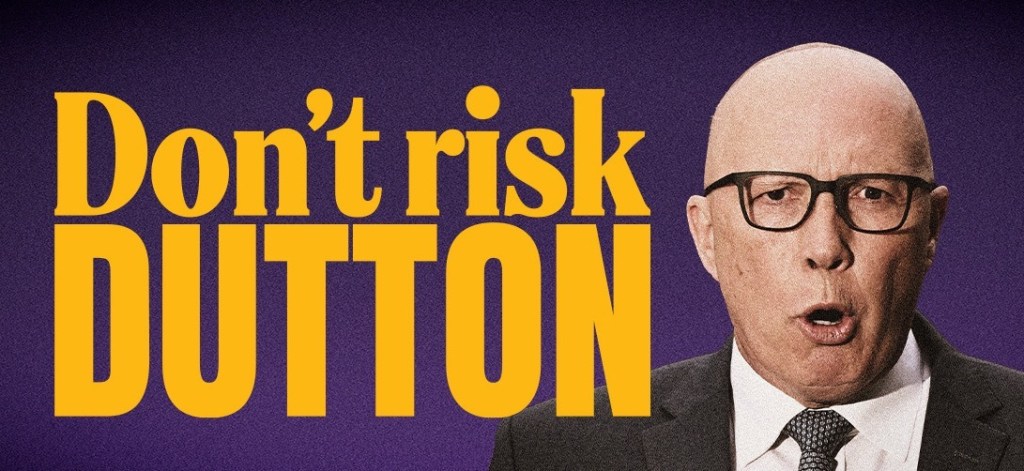
It is interesting the Dutton’s Budget reply was a solid example that he has abandoned workers’ wage growth and job security. As some noted, that despite it being a cost of living election, he didn’t mention the word ‘wages’ once
When Dutton was last in power the Coalition had a deliberate policy of low wages growth. The Coalition’s plans will put at risk real wages growth now occurring under the Federal Labor.
We also know that he sees no future for renewable energy and is hell bent on rolling back sustainable energy measures by adopting the expensive $600b nuclear ‘alternative’. Many believe that Dutton’s energy policies will push up household energy prices – not the real cost of living relief he intended.
Dutton, when Health Minister, oversaw a cut of $11.7 billion from Queensland public hospitals. He tried to introduce a GP tax and was voted the worst Health Minister in 40 years – by doctors!
As mentioned, some people would have Australians believe the major parties are all in lock step.
This is a lie.
As we have recently seen, there are many massive policy differences between the two on issues such as tax, housing, cost of living, the environment, education, energy, workers’ rights and conditions.
People should not be fooled – despite a compliant media that is uncritical of Dutton’s failures – the choice before us is clear. There are two very different visions on offer. We can either elect a government that seeks to address the needs of most Australians, or we can elect one that will serve the interests and the greed of the few.
As we look to what is happening across the World, with some countries wiping away a long existing legacy of democracy, social equality, economic justice and environmental protection, our country can’t afford the make the same dangerous mistake.
 Annerley Labor