 During the Wentworth by-election the Prime Minister indicated he was willing to accept New Zealand’s offer to resettle refugees if Labor supported the Government’s “lifetime ban” legislation, formally known as the Migration Legislation Amendment (Regional Processing Cohort) Bill 2016.
The Morrison legislation in its current form is a ridiculous overreach. It would ban anyone anywhere in the world who had sought refuge in Australia by boat from ever visiting Australia in the future, even as a tourist, or for business purposes that might be in Australia’s economic interests.
If the Coalition Government was able to negotiate arrangements with the United States to facilitate the refugee transfer agreement, it should be able to negotiate similar and appropriate conditions with New Zealand.
There is no doubt that the horrific situation involving children on Nauru can no longer be ignored. Action must be taken to resolve this festering issue. It is in this spirit that Labor is seeking to resolve this impasse and put the health and well being of vulnerable children ahead of other political considerations.
Labor is willing to consider passing the “lifetime ban” legislation if the Government agrees to the following:
• Guaranteed acceptance of New Zealand’s offer and the removal of all children and their families from Nauru to New Zealand;
• Ensuring that any lifetime ban is only applicable to the cohort of people seeking asylum transferred to New Zealand; and
• Limiting the legislation’s application to the Special Category Visa (subclass 444), which enables open travel of New Zealand citizens into Australia.
I want this legislation to move through the Senate as soon as possible, thus allowing the transfer of sick and vulnerable children and their families from Nauru to New Zealand.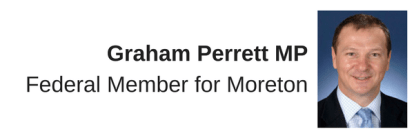
 The Australian Human Rights Commission Report into Sexual Harassment in Australia shows that cultural and societal change is needed in every sector, at every level, to end sexual harassment.
 Annerley Labor