
New climate change laws urged
Branch members have called on the Queensland Labor government to adopt a new legislative framework for climate change that specifically includes clear objectives, binding emission reduction targets, and regular monitoring and public reporting.
In tandem with any new, stronger laws, it is also suggested that an action plan be developed to manage risks and outline performance measures to track progress. Importantly, any new laws should mandate public engagement and ensure that the issues of affected vulnerable sectors and communities are thoroughly addressed.
Branch members believe that adopting new, more robust legislation will demonstrate strong leadership by setting clear objectives and emissions reductions targets and establishing standards of accountability, as well as demonstrating a transparent commitment to climate justice for all Queenslanders.
Currently, Queensland accounts for nearly a third of Australia’s greenhouse gas emissions, the highest of any Australian state or territory.
Call for youth justice reforms
A recent communique on youth justice reform from the Queensland Indigenous Labor Network (QILN) has received support from the Annerley Branch.
The communique expresses disappointment and objection to the current suite of proposed legislative changes to the Youth Justice Act 1992 and calls upon the Queensland Government to consult more broadly with Aboriginal and Torres Strait Islander communities, academics and industry experts. It also urges stronger reliance on evidence based programs and initiatives to inform future amendments to the Act, as well as the Charter of Youth Justice and the Child Protection Act.
QILN’s communique also urges the Queensland Government to increase the age of criminal responsibility from age 10 to 14 years and to extend care to young people in-out-of-home care until they turn 21 years of age – all within the current term of government.
The Branch has written to the Queensland Attorney General, adding its public support for the communique.
Support to re-introduce Family Law Court
Annerley Branch members have overwhelmingly supported a motion calling on the next Federal Labor Government ‘to reinstate, as a priority, a properly resourced and funded specific Family Court of Australia’.
The resolution was adopted as a result of the controversial decision of the Morrison Government to capitulate to One Nation in its reckless campaign to abolish the essential court system, despite deep concerns of many legal and family welfare organisations.
Many across Australia have expressed alarm that the removal of the court will inevitably cause severe distress for many families, particularly for women and their children.
Community Centre ‘roadmap’ developed
The Annerley Branch has adopted a ‘roadmap’ to establish a local community centre. The roadmap commits the Branch to working with local elected representatives and relevant community organisations to create a permanent community facility in the area. In addition, the plan also will seek to build community awareness and support for the issue.
Many branch members are concerned that there is a distinct lack of a community centre located, and operating, within Annerley. It is suggested that a service, physically located in Annerley, would be more accessible for residents, especially those who have mobility issues.
Annerley Labor celebrates 20 years
March 2021 saw the 20th anniversary of the Annerley Branch with a special dinner held at the Yeronga RSL. Members gathered to celebrate the milestone, on 20 March, reflecting on the achievements of the Branch which has grown from 40 members to almost 140 during that time.
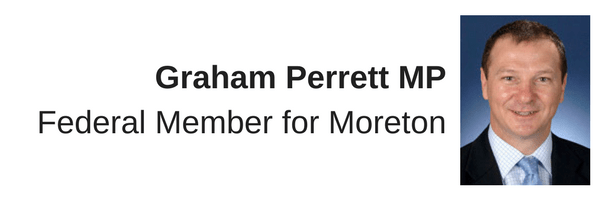
Joining the commemoration were Graham Perrett MP, Federal Member for Moreton and Cr Steve Griffith, Councillor for Moorooka Ward. A special video message was also sent from Griffith MP, Terri Butler.
The Annerley Branch was officially formed on 7 March 2001 when two local branches amalgamated to ensure a strong active presence in the area.

 Annerley Labor